Di Shore Track Technology Case Sharing
2026-06-22
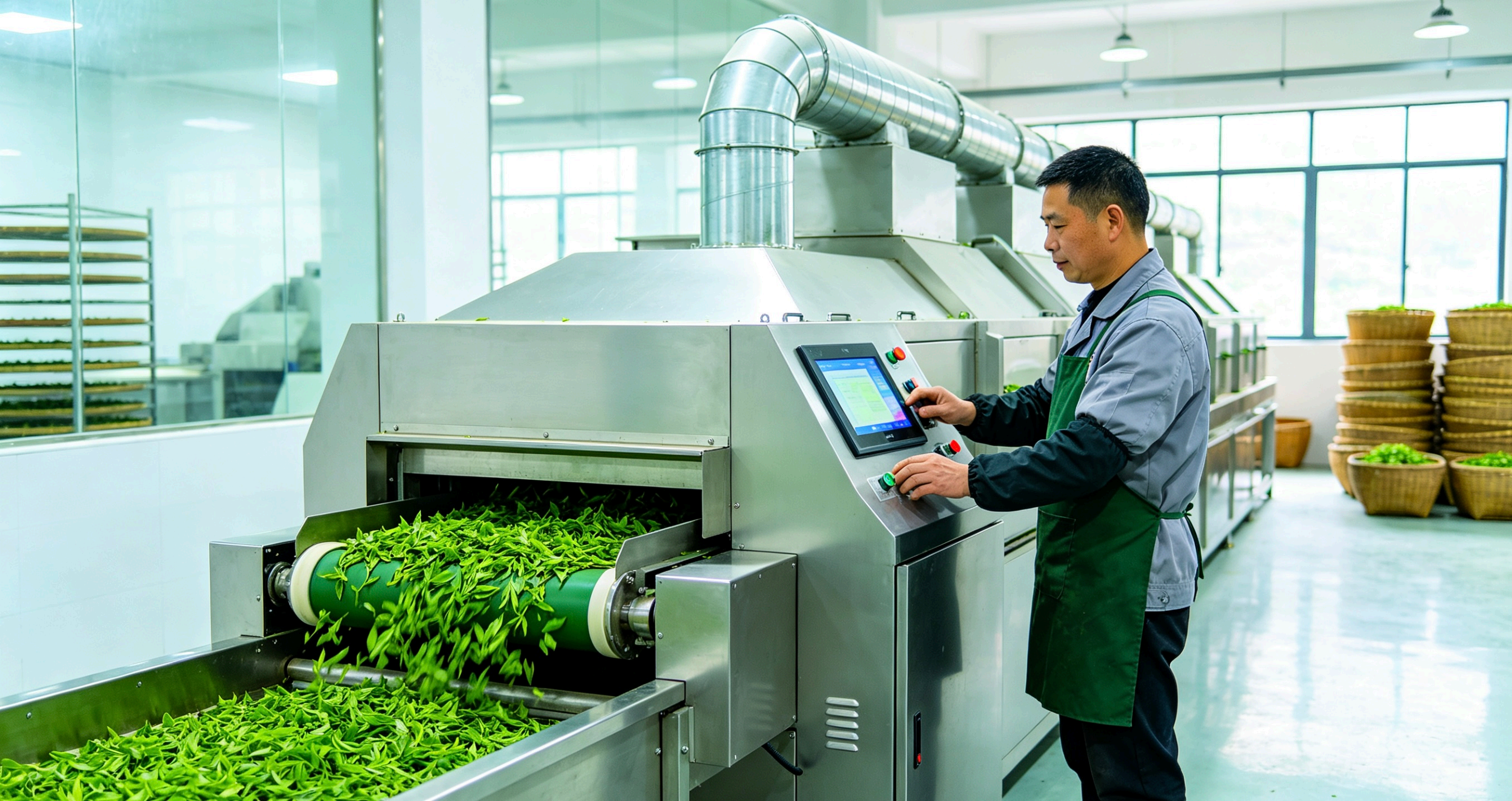
Case 1: Green Tea Fixation — A Tea Factory in Ya'an, SichuanChallengeA tea factory in Ya'an, Sichuan, had been producing Mengding Mountain green tea for nearly two decades, primarily supplying the premium markets in Chengdu and Beijing.Their biggest nightmare was the rainy season. Every June and July, Ya'an experienced nearly daily rainfall, with fresh leaf moisture content significantly higher than on sunny days. Traditional drum fixation machines rely on heat transfer through the drum wall—the outside heats up first, while the inside takes longer to reach temperature. On sunny days, when fresh leaves have lower moisture content, temperature control is manageable. But during the rainy season, as soon as the leaves enter the drum, the outer edges start to scorch while the inside remains under-fixed. Every rainy season, the defect rate—characterized by red stems and red leaves—would spike to 12%.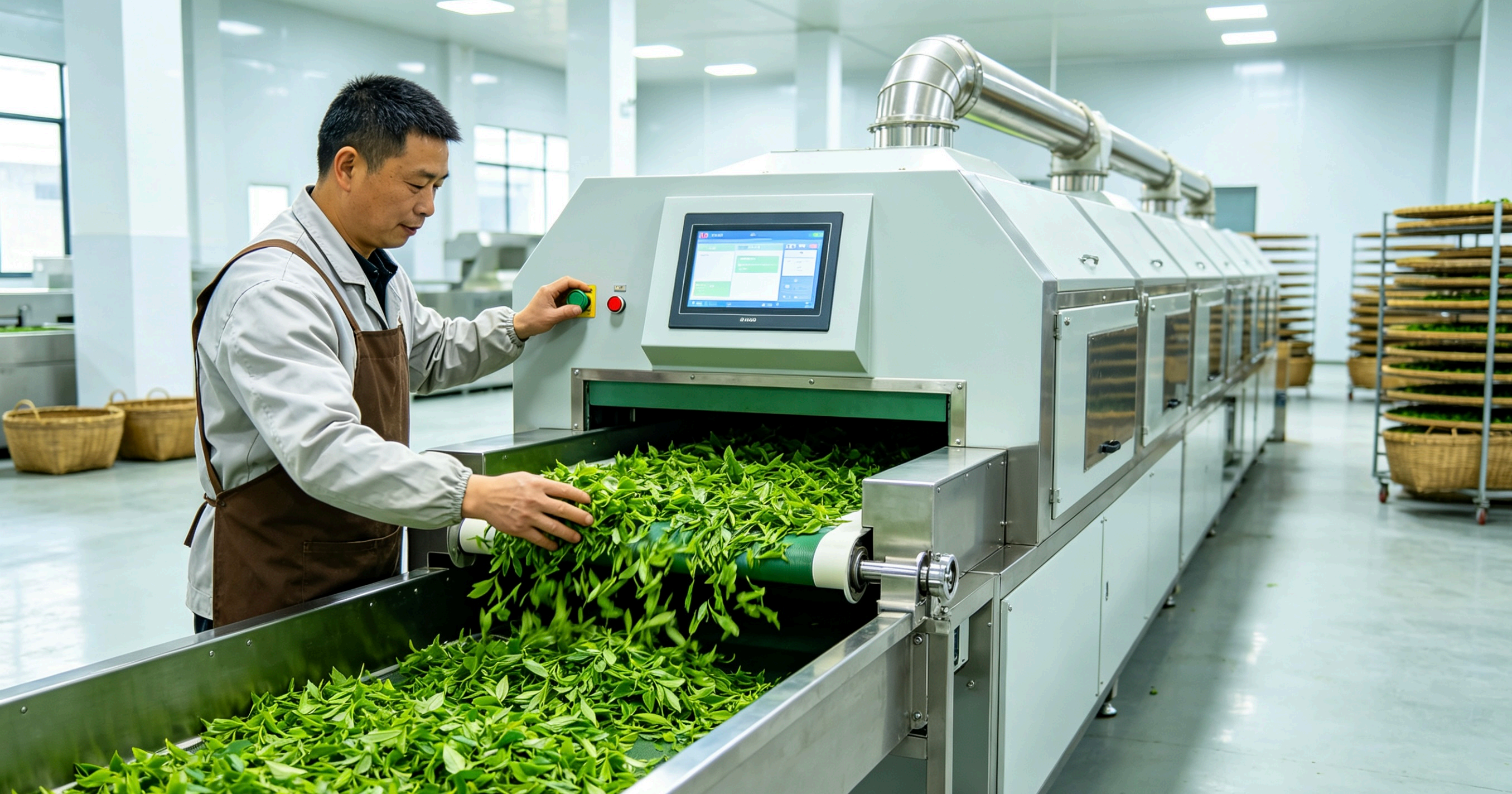
| Metric |
Before |
After |
| Red stem/leaf rate |
~12% |
Below 2% |
| Fixation time per batch |
30-40 min |
3-5 min |
| Daily fresh leaf processing |
600-700 kg |
1,500 kg |
| Labor |
2 masters + 2 assistants |
1 worker sufficient |
| Energy consumption |
— |
Reduced by 22% |
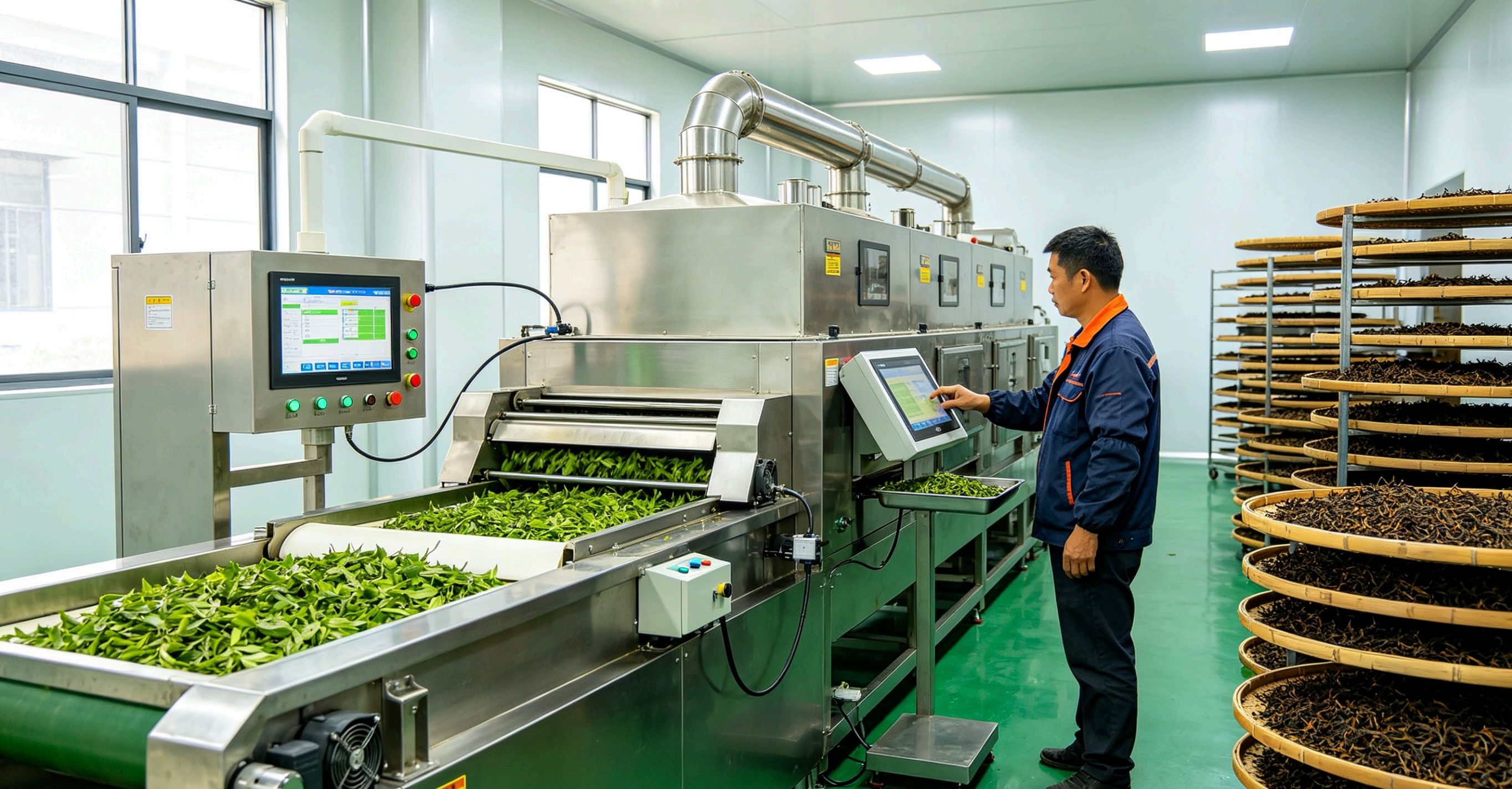
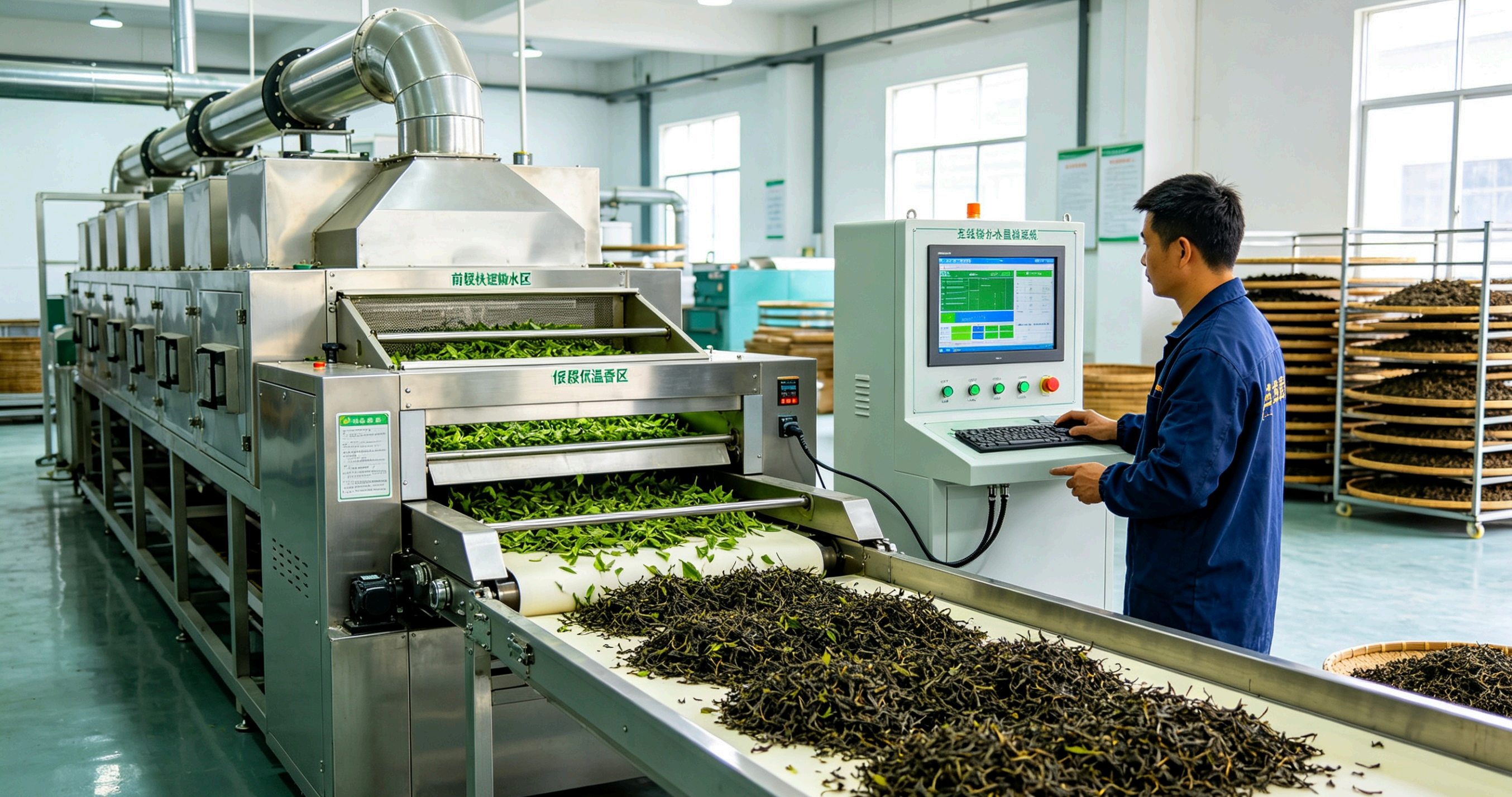
Client FeedbackAfter the first tea season ended, the factory owner shared two stories with us over the phone.First: He had a long-time client from Chengdu who visited the factory every year to inspect the spring tea. This year, the client arrived, tasted the new tea, paused for a moment, and suddenly asked: "Wang, did you change your tea cultivar? This year's Ganlu is noticeably greener and the liquor is much clearer." He smiled and said the cultivar hadn't changed—the fixation machine had. The client immediately placed an order on the spot: "I'll take two more tons of this year's spring tea."Second: His father, a tea maker himself who had retired years ago, visited the factory one day. He stood in front of the microwave fixation machine for a long time, and finally said: "If we'd had something like this back in our day, we would have saved ourselves a lot of scolding." The owner said his father had spent his entire life making tea and had never once admitted that "a machine could be better than a person." This was the first time.Case 2: Black Tea Drying — A Cooperative in Lincang, YunnanChallengeA tea cooperative in Lincang, Yunnan, working with dozens of surrounding tea-growing households, produced Yunnan Congou black tea primarily for export to Myanmar and Thailand.Their old hot-air dryer had been in use for nearly a decade, and the rainy season was their annual headache. With high moisture content in fresh leaves and high ambient humidity, drying a single batch took 6 to 8 hours, severely limiting throughput.But what truly pushed them to upgrade equipment was an incident two years ago involving a shipment to Yangon, Myanmar. Though the order was modest in size, it came from an important export client. Upon arrival at Yangon port, the buyer sampled the tea and found moisture content exceeding 8%—the surface felt dry, but residual moisture remained inside the leaves. With Myanmar's hot climate and the container sitting under the sun at the port for days, the trapped moisture evaporated and condensed inside the sealed bags. By the time the bags were opened, some leaves had developed mold spots.The buyer rejected the shipment without negotiation. Between freight costs, port demurrage charges, and the loss from downgrading the returned tea for domestic sale, the total hit exceeded RMB 100,000.Worse still, the buyer's purchasing manager sent an email—polite in tone, but unmistakably clear: "Your quality is unstable, so we cannot continue our partnership for now." Losing one client was manageable; losing credibility was not.Beyond moisture issues, buyer feedback on flavor had been consistently underwhelming. Their Yunnan black tea had good liquor color, but the aroma always felt lacking—clients described it as "green-tasting, not sweet enough." The cooperative head had always assumed this was a raw material or fermentation issue, never suspecting the drying process.SolutionWe installed a combined microwave drying and aroma-enhancement machine. The equipment has two zones: the front section uses microwave for rapid dehydration, heating from the inside out so the surface never dries before the interior does; the rear section uses low-temperature aroma enhancement, slow-drying between 40–80°C to bring out the signature sweet aroma of black tea.Most importantly, we added an online moisture content detection system. Previously, workers gauged doneness by grabbing a handful of tea and feeling it—entirely by experience. Now the machine automatically stops when the set standard is reached, ensuring every batch meets specification.Results
| Metric |
Before |
After |
| Drying time |
6-8 hours |
10-15 minutes |
| Moisture content compliance |
~85% (by feel) |
99%+ (automated) |
| Export rejections that year |
3 (including 1 refused) |
0 |
| Buyer feedback |
Green-tasting, not sweet |
Notably sweet aroma, agreed to 8% price increase |
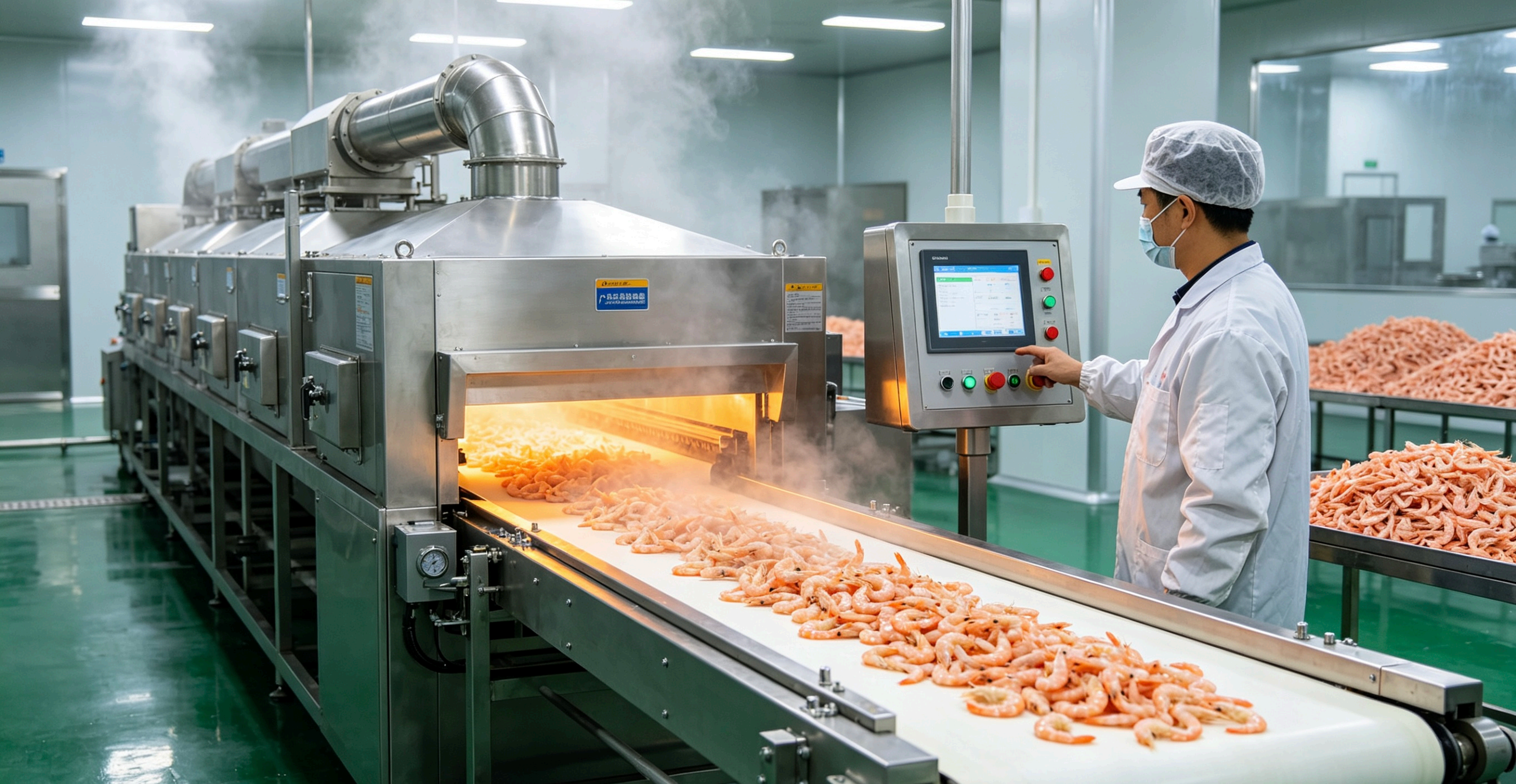
Client FeedbackThe cooperative head later shared two things with us.First: The Myanmar buyer came back this year. He hadn't actually reached out—the buyer contacted him first, having heard from other clients that his tea seemed different this year. He sent samples, and after tasting them, the buyer called directly: "Did you change your fermentation process? This year's aroma is on a completely different level from last year's."Second: He honestly told the buyer that the fermentation process hadn't changed at all—only the drying equipment had. The buyer paused for two seconds and said: "Even better. If you'd changed the process, I'd be concerned. But changing equipment means your quality is now stable." The buyer signed an intended order for next year on the spot, with an 8% price increase over last year.He now tests moisture content for every batch before shipping, saying he never wants to relive that feeling of "waiting by the phone while my goods sit at someone else's port."Case 3: Seafood Drying — A Shrimp Processing Plant in Beihai, GuangxiChallengeA seafood processing plant in Beihai, Guangxi, had been producing dried shrimp for export to Vietnam and Malaysia for over a decade.Their old hot-air dryer had been in use for years, but the dried shrimp it produced had a persistent problem: dark reddish color and tough texture. The owner was aware of the issue but had always thought, "Isn't that just what dried shrimp look like?" and didn't pay it much attention.What truly shook him was attending a food exhibition in Hanoi last year. Walking through the exhibition hall, he spotted a booth of a Vietnamese local competitor displaying dried shrimp with a natural pinkish color. He picked one up, squeezed it—not hard, with some springiness. Pretending to be a customer, he asked for a price and was quoted 20% higher than his own selling price. He bought half a pound, took it back to his hotel, stared at it on the table for a long time, and told himself: "It's not that dried shrimp are supposed to be dark red—my equipment is the problem."Another practical headache was moisture reabsorption. Beihai has high ambient humidity, especially during the spring rainy season when walls themselves would sweat. Shrimp would be dried and stored in the warehouse, feeling dry on the surface, but days later some would start to soften. Every year, one or two shipments would be returned due to mold from moisture reabsorption. His Vietnamese client had complained more than once: "Boss, why can't your shrimp stay dry?"SolutionWe installed a seafood-specific microwave dryer.Microwave heating works from the inside out—moisture inside the shrimp evaporates first, unlike hot-air drying where the surface hardens into a crust while the interior remains wet. Paired with an intelligent dehumidification system that extracts evaporated moisture in real time, the shrimp comes out ready for immediate packaging and storage without risk of reabsorption.Results
| Metric |
Before |
After |
| Drying time |
7-8 hours |
18 minutes |
| Finished color |
Dark red, dry/hard |
Natural pink, springy |
| Mold from reabsorption |
~3% |
Nearly 0 |
| Export selling price |
— |
Increased by 15% |
Client Feedback
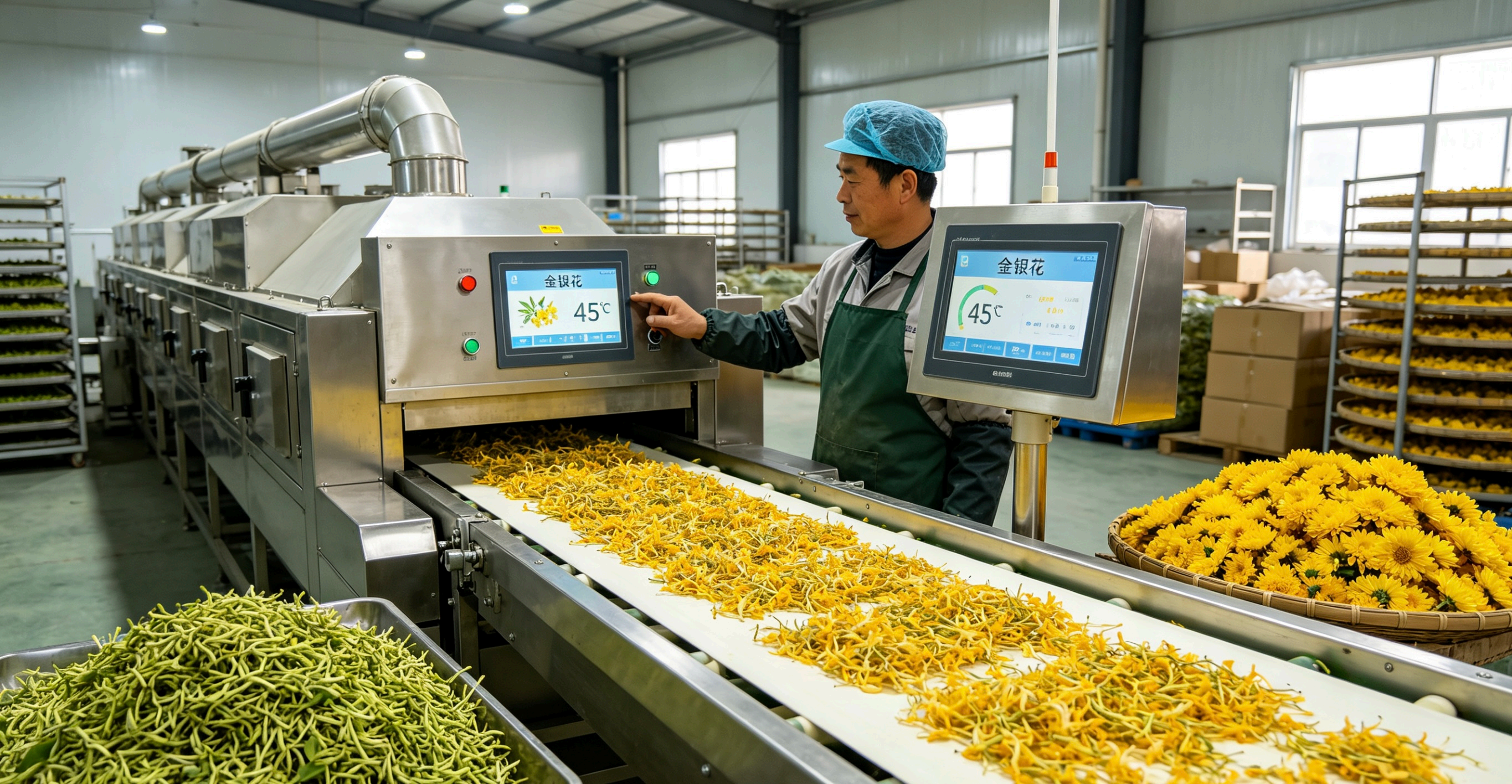
Six months after installing the equipment, the owner returned to the same food exhibition in Hanoi—this time as an exhibitor, with new samples.A Malaysian buyer stopped at his booth, picked up a shrimp, squeezed it, held it up to the light to examine the color, and asked: "This is your product? It looks completely different from what I saw at another booth last time." The owner smiled and said, "Because I changed my equipment." The buyer immediately placed a trial order for 500 kg.After the trial order was completed, the buyer sent a WhatsApp message that the owner screenshotted and showed us. It read: "Your quality is now better than most Vietnamese suppliers. Let's talk long-term."The owner later told us: "I used to go to exhibitions worried that buyers would come over and see my products. Now I go worried they might not make it to my booth."Case 4: Medicinal Herb Drying — A Herb Trader in Bozhou, AnhuiChallengeBozhou, Anhui—China's largest distribution hub for medicinal herbs. A herb trader had been in business here for over a decade, specializing in honeysuckle, chrysanthemum, and goji berries, with an annual processing volume of around 200 tons, supplying herb slices factories and flower tea brands.His biggest pain point was drying. The traditional method was sun-drying—spread the herbs on the ground and dry for days if the weather cooperated; if not, they'd sit piled up in the warehouse waiting. Bozhou sits on the Huaibei Plain, with hot and humid summers. During the plum rain season, it could rain for over ten days straight—the honeysuckle piled in the warehouse would start to heat up, yellow, and mold.He remembered one year's loss vividly. That batch of honeysuckle had just been purchased from Shandong—exceptional quality—and he had intended to process it for a long-time client, an herb slices factory supplying premium flower tea brands. Then came the continuous rain. The herbs sat in the warehouse for twelve days. When he finally pulled them out, the top layer was already moldy, and the batch underneath had darkened. He ended up selling the entire batch as seconds, losing over RMB 200,000 in one go.He had also tried using a hot-air oven for emergencies. But the temperature was hard to control—especially with heat-sensitive flowers like honeysuckle. A slight temperature overshoot would turn the flowers white and degrade the active ingredients. The herb slices factory would test for chlorogenic acid content, and if it didn't meet standards, they wouldn't accept the shipment. "Sun-drying doesn't work, hot-air drying doesn't work—during those rainy seasons, I just wanted to shut down and call it quits," he said.SolutionWe installed a multi-functional medicinal herb microwave dryer.We pre-set a process curve for each of the three herbs—honeysuckle, chrysanthemum, and goji berries—all using low-temperature drying between 40–60°C to maximize retention of natural color and active ingredients. Switching between products is a one-touch operation, eliminating the need for re-tuning each time.Results
| Metric |
Before |
After |
| Mold loss |
8-10% |
Below 1% |
| Honeysuckle color |
Dull yellow or whitish |
Golden and vibrant |
| Chlorogenic acid content |
Below standard |
Increased by ~18% |
| Product switching |
2-3 hours of tuning |
One-touch switch |
Client FeedbackThe most surprising moment came after he sent his newly dried honeysuckle to the herb slices factory for testing.The factory's quality inspector called him directly after reviewing the report: "Old Zhao, your honeysuckle's chlorogenic acid content is higher than everything else we're receiving, and the color is beautiful. Did you change your source?"He said the source hadn't changed—only the dryer had. The inspector paused, then said: "Then keep drying it this way. I'll let our purchasing team know—your batches get priority in inspection."A month later, the factory's purchasing team proactively referred a client—a premium flower tea brand looking for a stable honeysuckle supplier. He met with the brand's head, who took one look at the sample and said: "With this color and quality, I'll take as much as you can supply."His orders are now booked through next year, and he plans to add another machine to expand capacity. He told us: "In over a decade of trading herbs, this is the first time I've won a client purely because of quality—not because of personal connections, not because of pricing."